Case study · Holiday home with its own booking page
Of 648 visitors at the calendar, 163 reached the form.
A holiday home in Apulia, with its own website for years. Visitors found the calendar, but three out of four left before they could ask for dates. I rebuilt the site so free dates, price and the request sit in one place.
Trullo Grano di Puglia, Carovigno German and English live
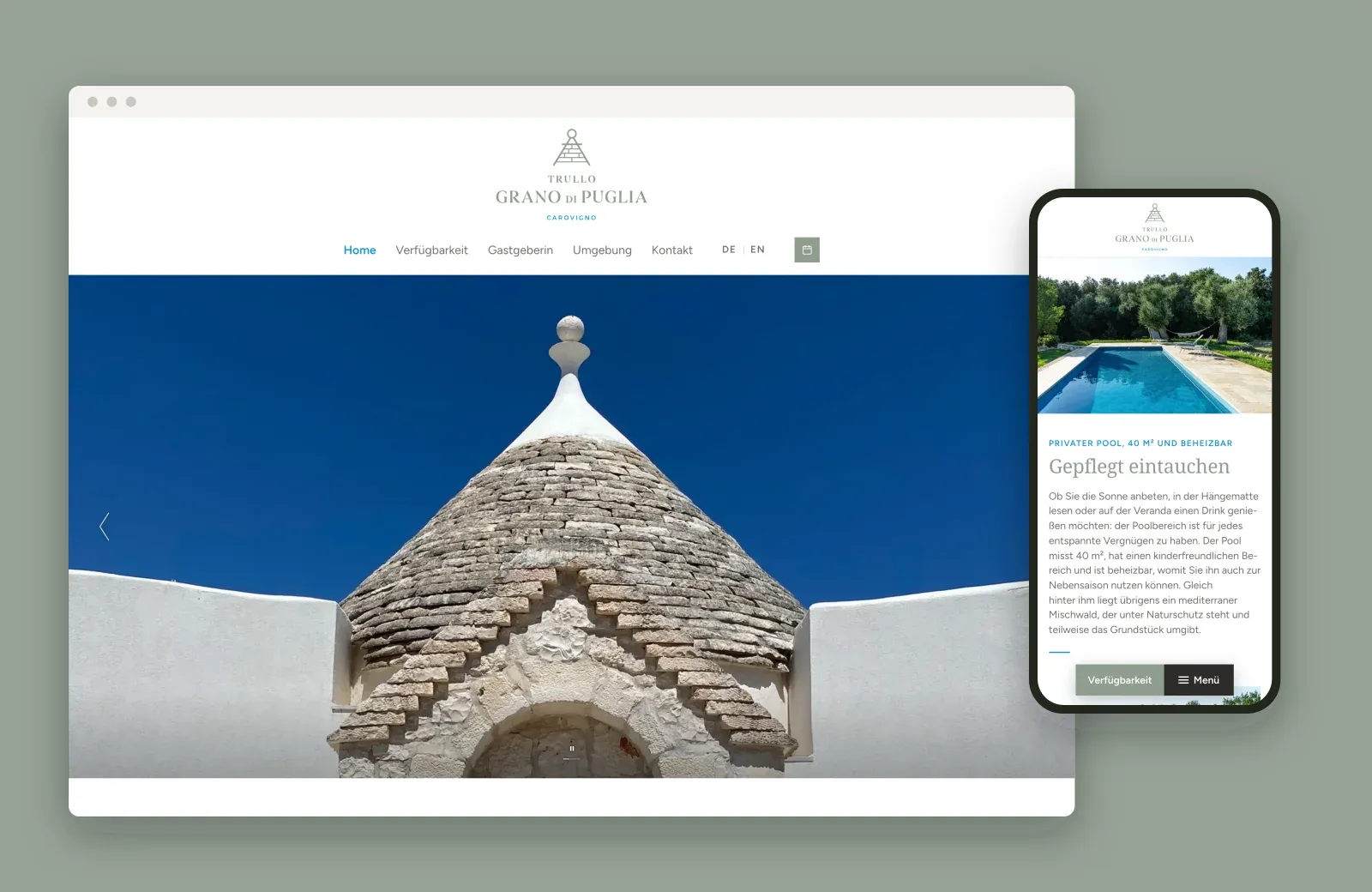
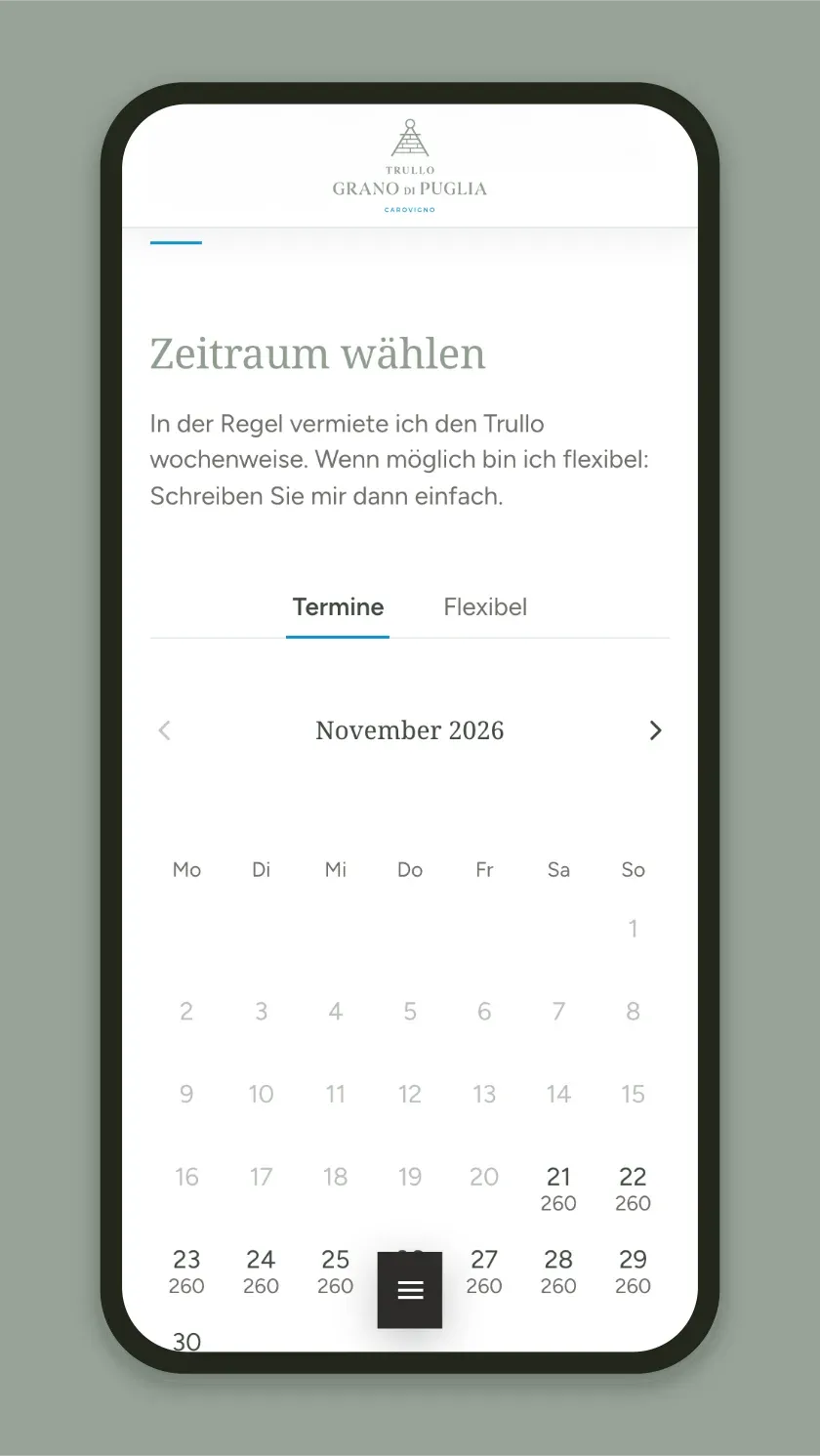
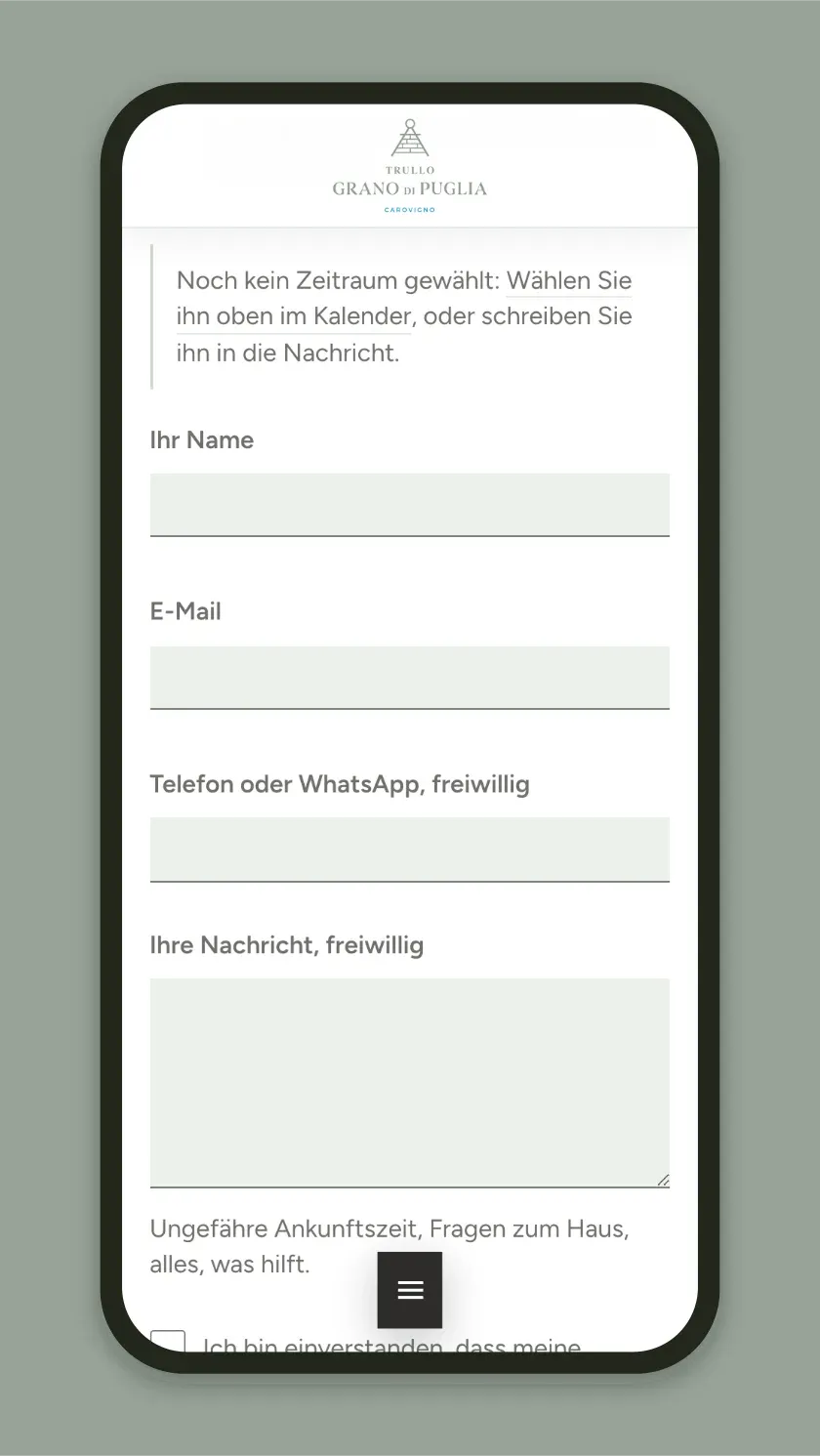
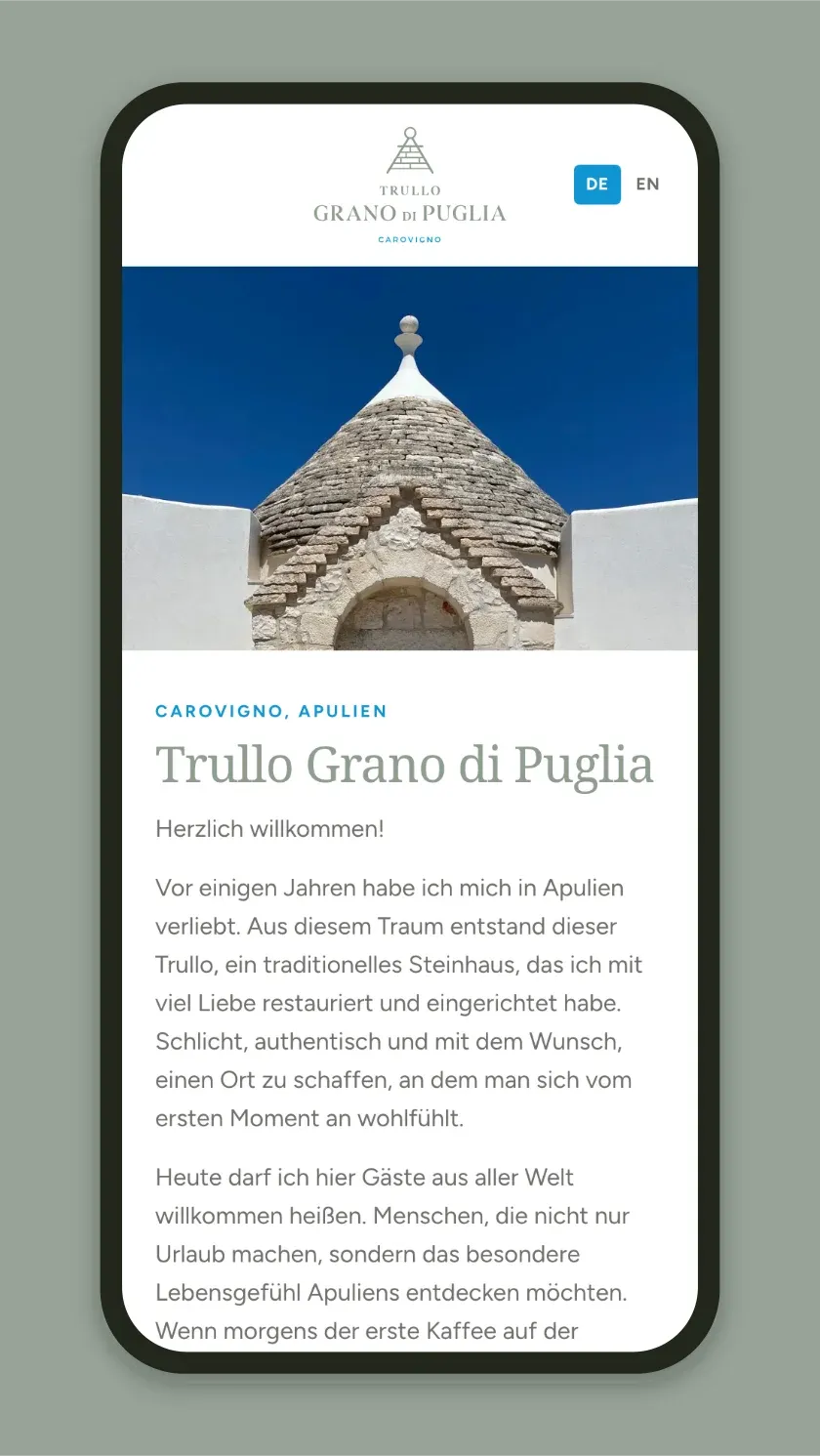
What the new site looks like
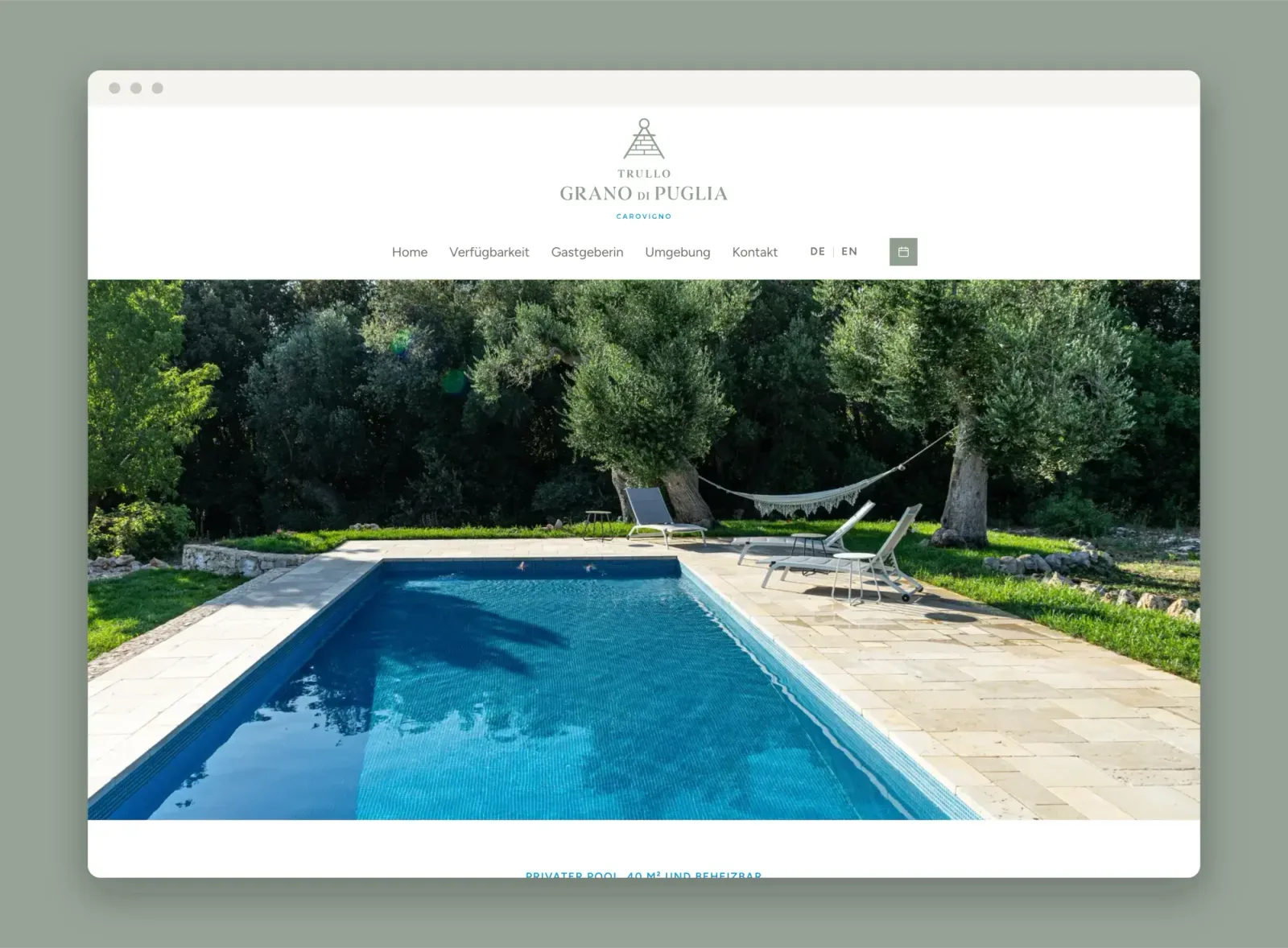
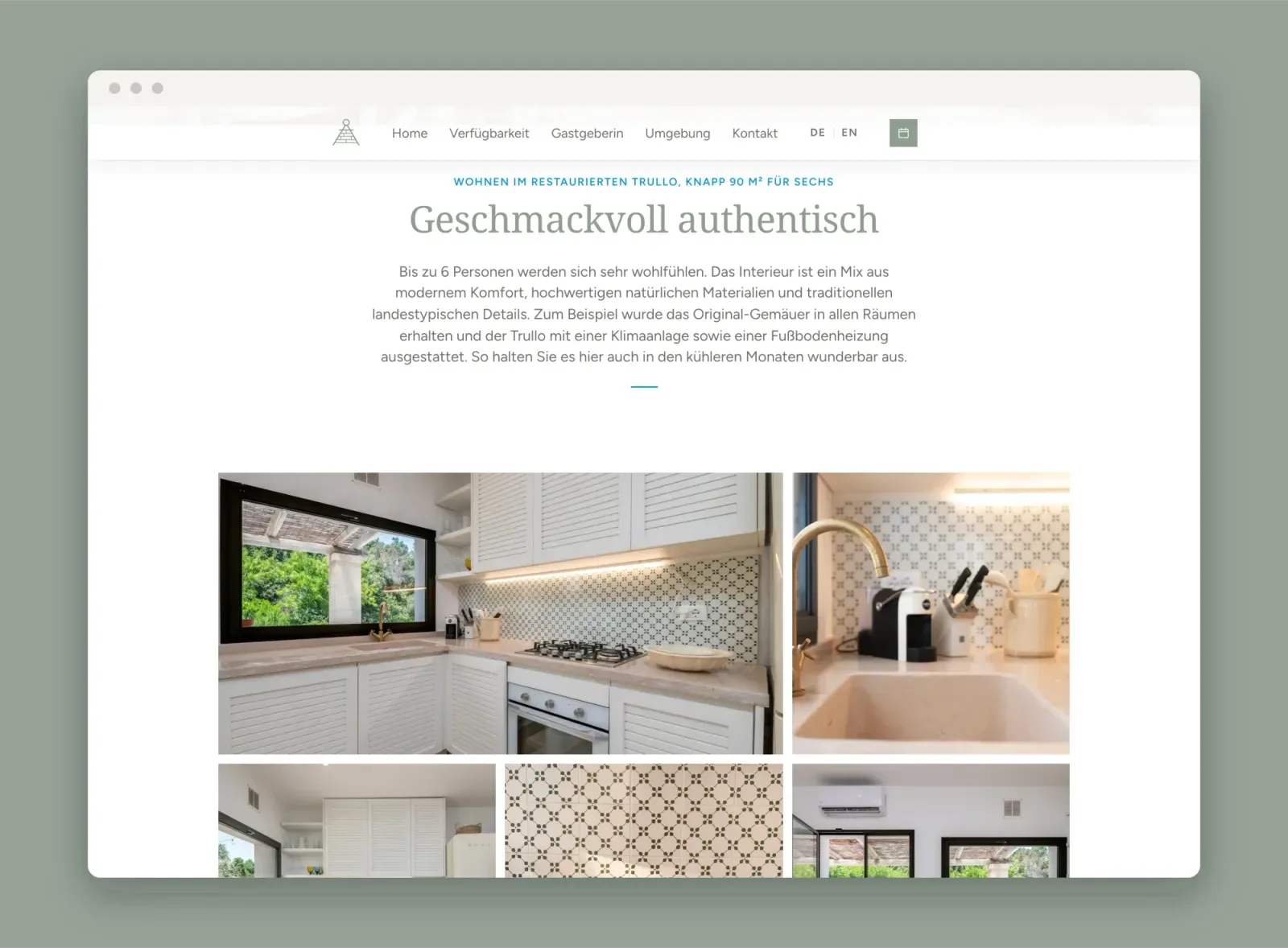
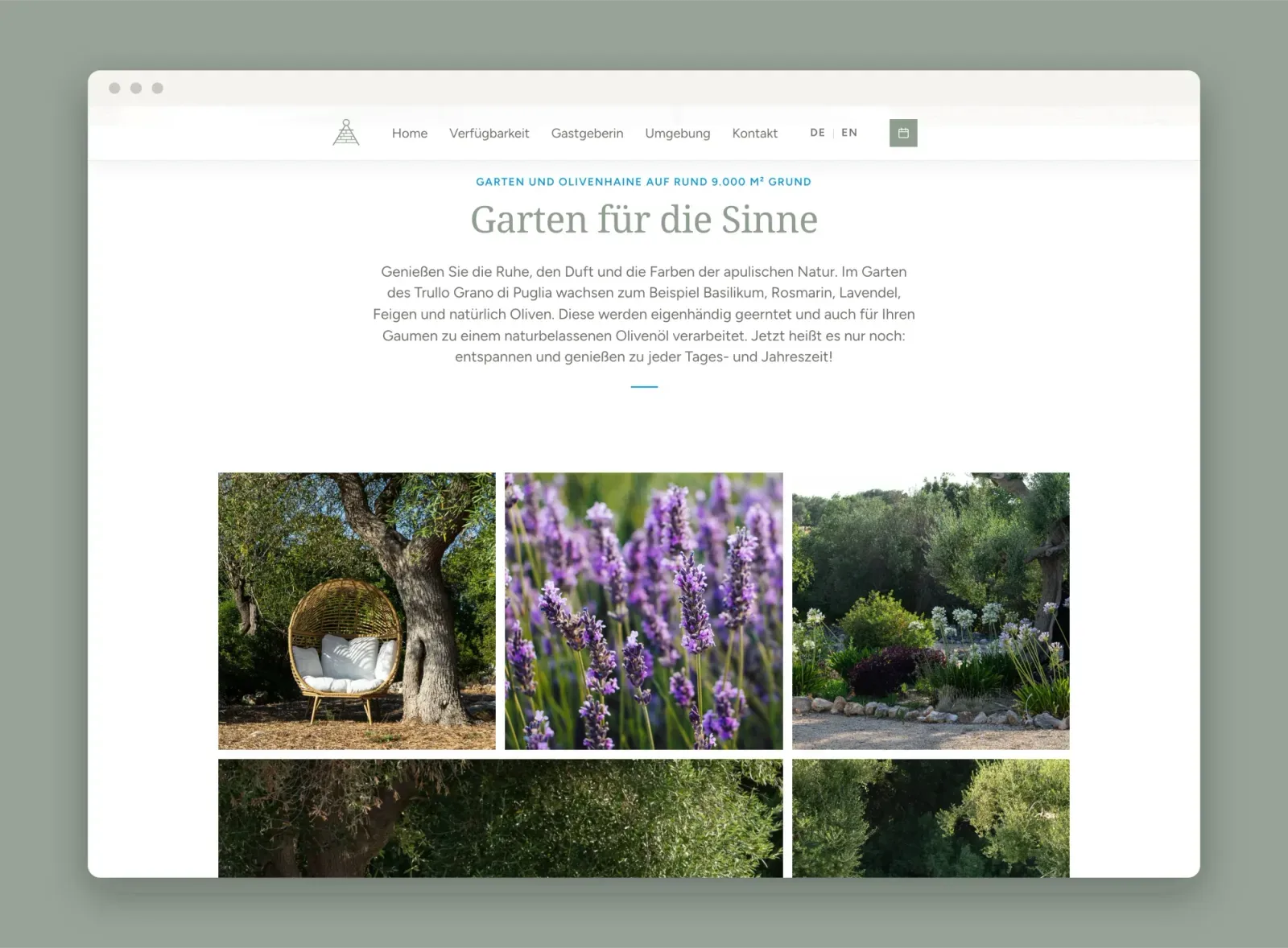
Where the old site lost enquiries
The loss sat one click before the enquiry. 485 visitors reached the calendar and never arrived at the form.
Three reasons, all checkable on the old site:
- The calendar only displayed free days. It could not be clicked.
- The form lived on a second page.
- What a stay costs sat in a single sentence of body text.
The owner’s Google Analytics, eight months to 01.09.2026, 1,999 sessions. Page views counted.
What I built
- Calendar, price and request on one page. Every free day shows its nightly price. Whoever picks a period is standing in front of the form.
- An enquiry, not a booking with payment. The owner checks every period herself and confirms the price. That is how she wanted it, and how she rents her house.
- Answers before the enquiry. 22 questions with amounts: tourist tax, deposit, dogs, pool heating.
- Complete details. Legal notice, the property’s registration number, privacy. The site loads no third-party services and sets no cookies, so it needs no cookie banner.
- A move without dead addresses. 25 addresses from the old sitemap: 20 stay, 5 redirect. On launch day I checked 57 more addresses Google knew from Search Console; the two missing redirects were added the same evening.
- A guest guide of its own. At willkommen.trullo-puglia.com, guests get every house note after booking, in the same design as the site.
What I deliberately did not build
- No stars and no guest reviews until the owner releases them.
- No price on the homepage. That was her wish; prices sit in the calendar and on the price page.
- No payment system. The confirmation stays between guest and host.
Her site, her voice
My first draft looked different from her existing site and sounded more sales-driven. The owner turned it down. She wanted to recognise her house.
I pared the look and the words back. Her pictures and her sentences now sit up front. What stayed is what saves her work and what used to cost enquiries: the calendar with prices, the request on the same page, and everything visitors never see.
Since then I ask one more question before the first draft: do you want a new site, or your current one, improved?
Measured, with dates
What these numbers do not show
- Speed is measured in the lab, with the same method on both sites, but not on the same day: the old site last on 06.10.2026, the new one on launch day.
- Before, page views were counted; after, events. The two counts are similar, but not the same.
- More enquiries are not yet bookings. I give no booking figures; they belong to the owner.
- Search numbers swing for weeks after a move. Before day 90 I quote none.
When I measure again
- Day 1speed and redirects at the live address, done 20.11.2026
- Day 7first numbers from the counter
- Day 30share from calendar to form
- Day 90search and AI answers, the house names first
- Month 6every row filled
Who did what
From me: concept, evolution of the design, technical build, findability in Google and in AI answers.
From her side: the design line of the first website from 2019 (Jalun Design), the introductory copy (René Wentzel, brought up to date), plus her photos, prices and terms.
The same house comes with a digital guest guide in the site’s design: recommendations and house notes reach guests after booking, not on the website before.
Does your rental lose guests at the same spot?
Whether visitors drop off between calendar and request sits in your own numbers. I will look at them with you.